BillForge
A modular multi-tenant accounts payable platform: invoice capture, approval workflows, vendor management, and reporting, with a Rust/Axum backend and a Next.js interface.
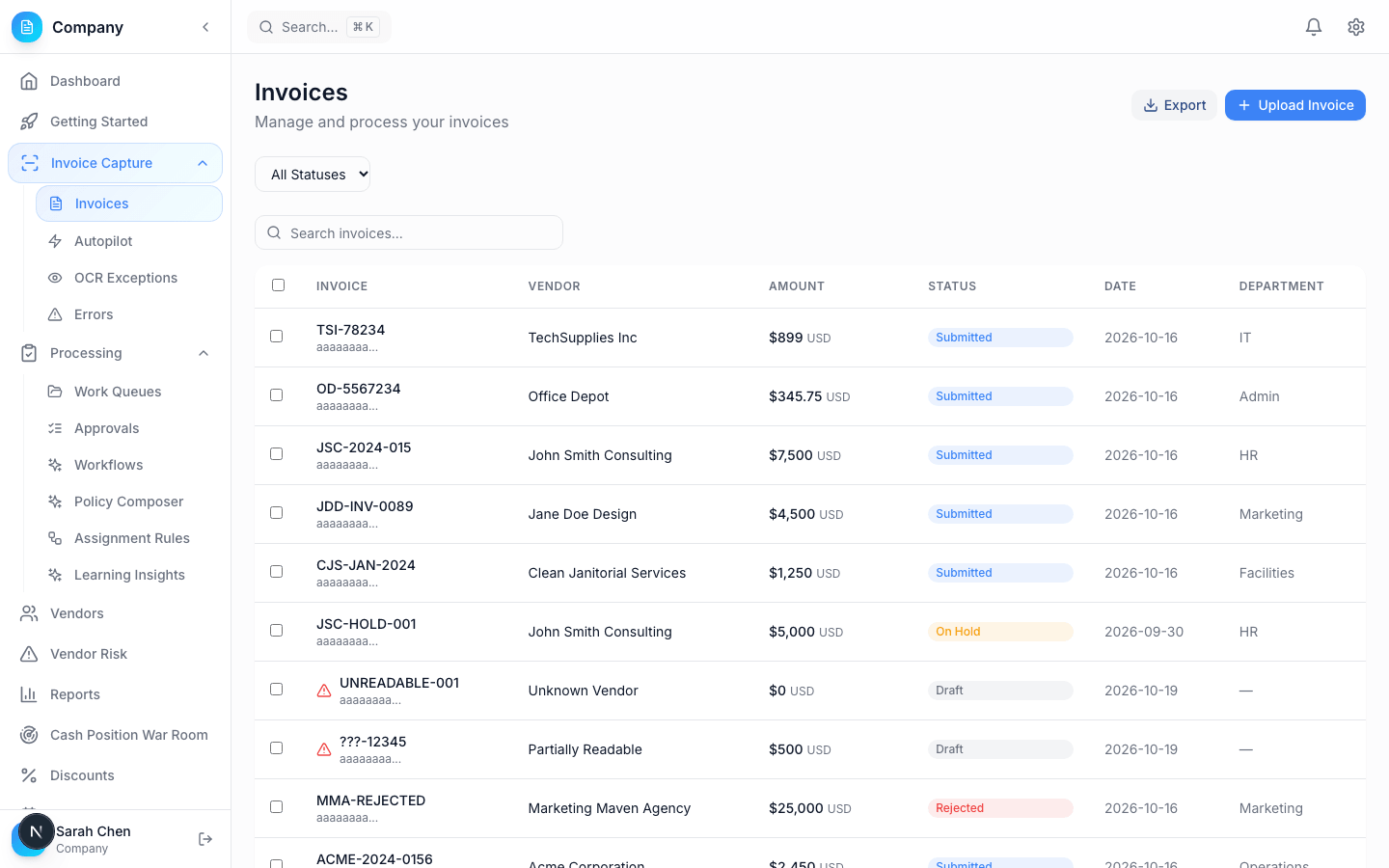
Screenshot unavailable. The project description below explains the workflow.
What it is
BillForge automates the accounts payable lifecycle from document capture through approval: a multi-tenant SaaS platform where each module - invoice capture, processing, vendor management, reporting - can be enabled per organization, with tenant-scoped data access.
The problem it solves
Accounts payable teams live in a loop: receive invoices, key them in, chase approvals, answer “where is it” questions, and reconcile at the end of the period. Off-the-shelf tools handle slices of this; BillForge was built to own the whole loop in one system with clean boundaries between modules.
My contribution
I designed and built the platform end to end: the Rust/Axum API with per-tenant isolation, the module architecture, the Next.js interface, and the workflow engine that routes invoices through configurable approval pipelines.
Architecture
- Backend: Rust with Axum behind an API gateway; JWT authentication and tenant-context middleware protect module routes.
- Modules: invoice capture, processing, vendor management, and reporting, each independently enableable per organization.
- Frontend: Next.js with React Query and Zustand.
- Storage: PostgreSQL with a multi-tenant schema.
Engineering decisions
Modular monorepo over microservices. Modules are separated by boundary but deployed together, which keeps a solo-maintained product operable while preserving the option to split later.
Tenant isolation at the middleware boundary. Authenticated module requests carry tenant context before they reach module logic, so feature handlers receive the tenant context needed for isolation checks.
Workflows as data, not code. Approval pipelines are configured per organization rather than hardcoded, which is what makes per-tenant enablement of the processing module possible.
Stack
Rust, Axum, Next.js, TypeScript, PostgreSQL, Tailwind CSS.
The walkthrough above runs against a local instance with a synthetic organization, vendors, invoices, and users. The portfolio does not host an accounting backend.